The Wild Sage logo
The Wild Sage Logo

Herbal Medicine at your fingertips

Comprehensive database of herbal remedies with detailed safety information and traditional uses

New to herbal terms? Read the glossary →
ADHD
Abcess
Acid Reflux Relief
Acinetobacter
Acne
Acne Vulgaris
Addisons
Adenomyosis
Adenovirus
Adrenal fatigue
Aging
Aids
Alcaligenes faecalis
Alcoholism
Allergic Rhinitis
Allergies
Allergy
Alopoecia
Alopoecia nervosa
Alzheimer's, Dementia & Cognitive Decline
420 herbs found
Important: This information is for educational purposes only. Always consult with qualified healthcare professionals before using herbal remedies, especially if you have existing health conditions or take medications.
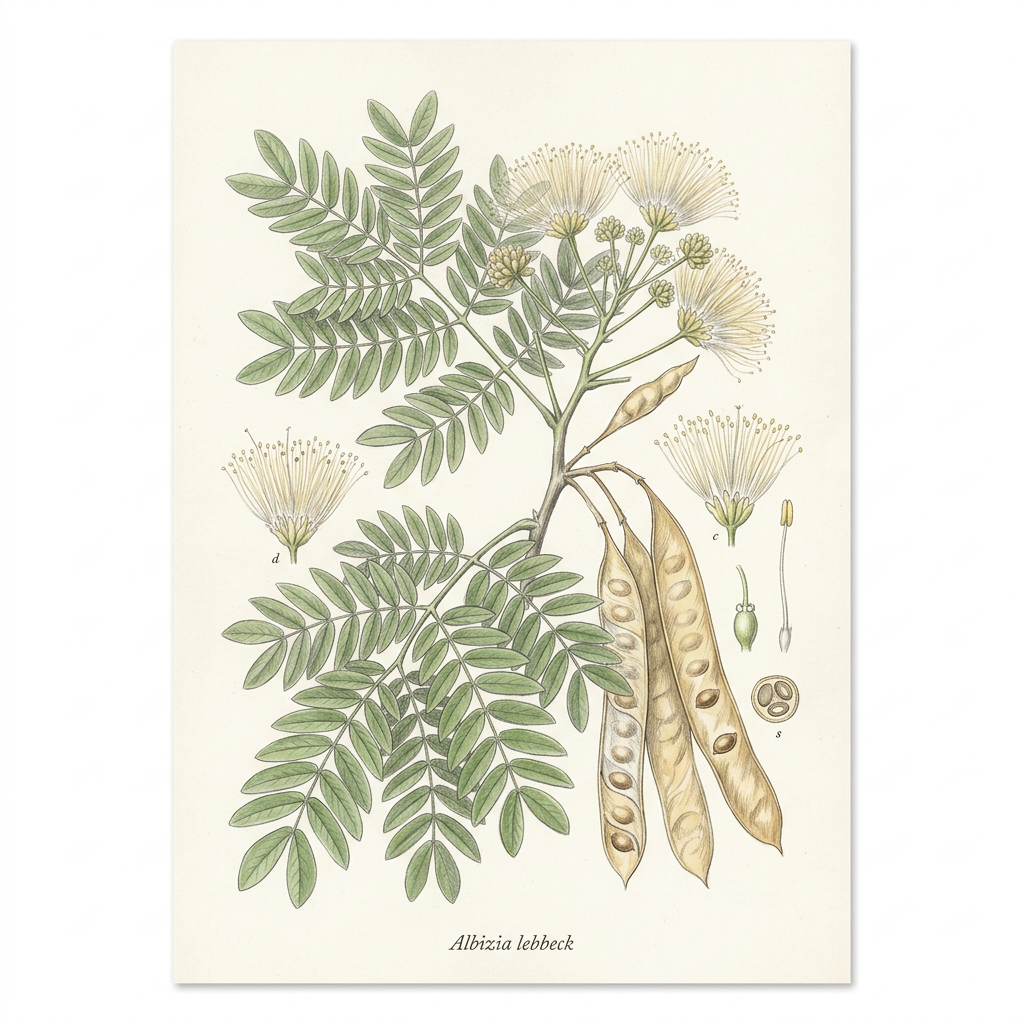
Persian silk tree

Persian silk tree

Albizia lebbeck

low risk Risk
Fabaceae
Known for its calming and uplifting properties, often used to support emotional well-being and reduce stress. Used for grief
<p>Albizia lebbeck, commonly known as the Persian silk tree or Siris, is a large, deciduous tree belonging to the Fabaceae family, identifiable by its bipinnate leaves and striking, fragrant, powder-puff-like flowers which are creamy-white or pale yellow. It is native to tropical and subtropical regions of Asia and northern Australia, frequently cultivated for its ornamental value and its nitrogen-fixing capabilities in soil. The tree produces flattened, straw-coloured pods containing numerous seeds that rattle in the wind, a feature that has given rise to various folk names globally.</p><p>Traditionally used for, in the context of Ayurveda and Unani medicine, the bark and flowers have been employed for centuries for their perceived properties in supporting respiratory health and skin conditions. Historical use often focuses on the plant's role as a support for the immune system, particularly during seasonal transitions, and as a topical aid for soothing irritated tissues. It has long been regarded as a cooling agent in traditional herbology, often recommended for balancing excess 'heat' within the body's systems.</p><p>Modern research into Albizia lebbeck is ongoing, with experimental evidence suggesting its potential role in modulating mast cell degranulation and providing support for healthy inflammatory responses in the respiratory tract. While scientific studies on human populations remain limited and more clinical data is required to establish its efficacy, current pharmacological interest is largely focused on the saponins and flavonoids present in the plant. In clinical practice, it is typically employed as a tonic for the upper respiratory system and as a support for the skin during occasional allergic sensitivities.</p>

Uses & Conditions

Mood Support
Calming
Anxiety Disorders
Depression
Sleep Disorders
Hypertension
Hyperlipidaemia
Skin Complaints
Boils
Food Allergies
Rhinitis
Psoriasis
Urticaria
Stress
Irritability
Grief
Dermatitis
Eczema
Asthma

Actions

Anxiolytic
Sedative
Diuretic
Digestive Stimulant
Cardiotonic
Anti-hyperlipidaemic
Anti-cancer
Vulnerary
Anti-allergenic
Stimulant
Carminative
Oxytoxic
Analgesic
Anthelmintic
Astringent
Tonic
Hypocholesterolemic
Anti-microbial

Parts Used

Bark
Flowers
Seeds
Leaves

Native Countries

India
Southeast Asia
North Africa
Australia
Tropical Americas

USDA Hardiness Zones

9
10
11

Contraindications

  • Not recommended during pregnancy due to lack of safety data
  • Avoid during breastfeeding until further clinical research is established
  • Caution for individuals with severe immune system disorders
  • Discontinue use at least two weeks prior to scheduled surgery

Potential Side Effects

  • Mild gastrointestinal upset
  • Potential for allergic skin reaction in sensitive individuals
  • Drowsiness if taken in very large doses

Interactions

  • Immunosuppressants: potential risk of altering immune response
  • Use caution with prescription medicines

Dosages, tincture ratios & research — members only

Unlock Garreth's dosing guidance, tincture ratios, the dosage calculator and the research studies for Persian silk tree.

Your assessment and results stay saved — upgrading only unlocks more of them.

See membership plans

Community Photos

No community photos yet. Sign in to upload photos.

Reviews & Ratings

Sign in to leave a review.

No reviews yet. Be the first!

GF

Garreth Falls — B.Th., Dip. H.M., MNIMH

Content curated and reviewed by Garreth Falls, Consultant Medical Herbalist · The Wild Sage

Medical Disclaimer: This information is for educational purposes only and is not intended as medical advice. Always consult with qualified healthcare professionals before starting any herbal treatment.
Ayurvedic tradition

Sustainability & quality

Abundant

Very common tree. Sourcing from well-managed groves ensures consistency in bark and seed quality.

Key constituents

Triterpenoid saponins, Flavonoids including kaempferol and quercetin, Acacibechin, Melacacidin, Tannins, Catechin

References

  1. Pole "Ayurvedic Medicine" 2006
  2. Herbal Reality. Herb monographs. herbalreality.com

Reviewed by Garreth, Medical Herbalist (MNIMH) · November 2026

Related conditions

Explore conditions where Persian silk tree is traditionally used.

Related Herbs
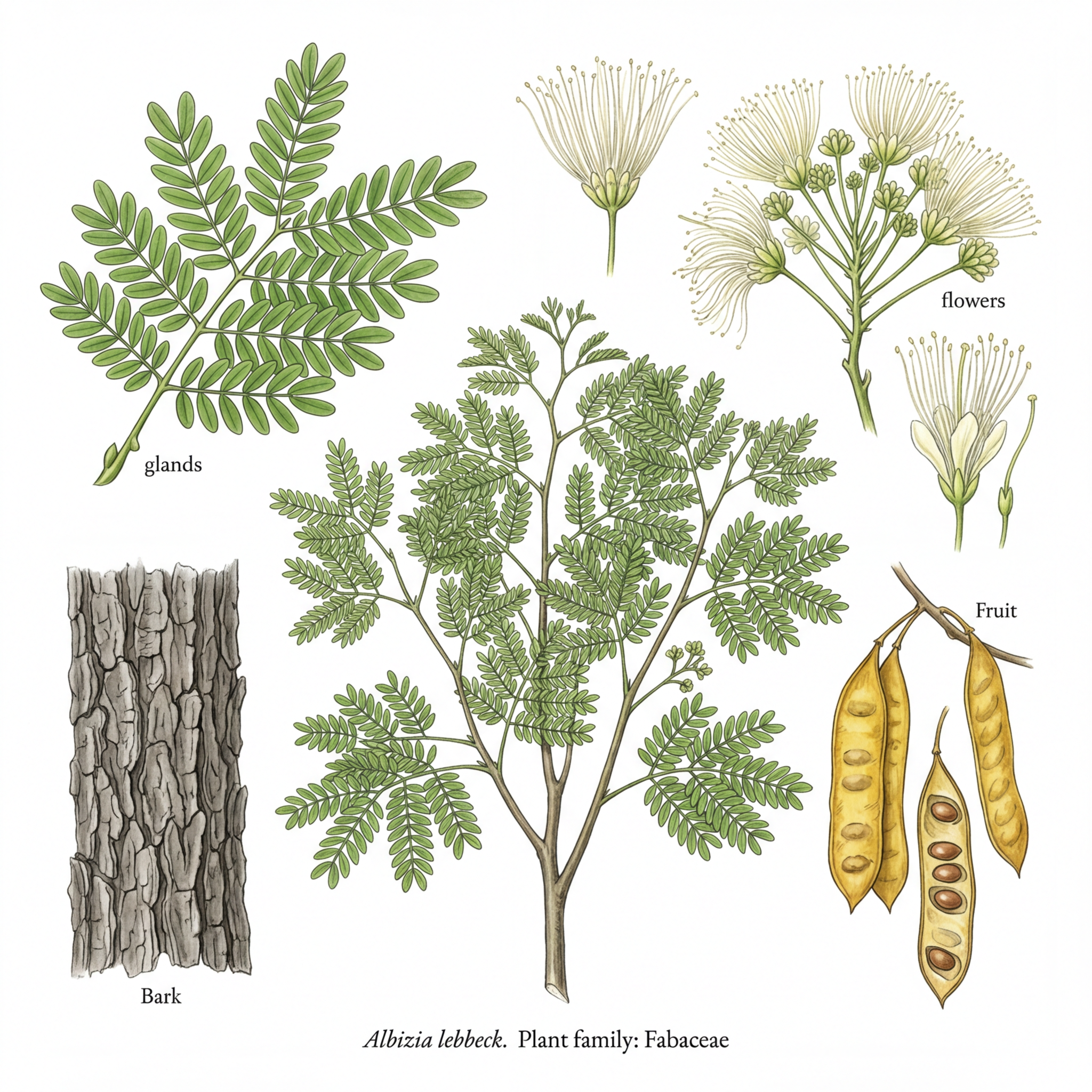
Siris Tree

Siris Tree

Albizia lebbeck

Grief Support
Rose

Rose

Rosa damascena

Mood Support
Ashwagandha

Ashwagandha

Withania somnifera

Immune Support
Chamomile

Chamomile

Matricaria recutita

Digestive Tonic